
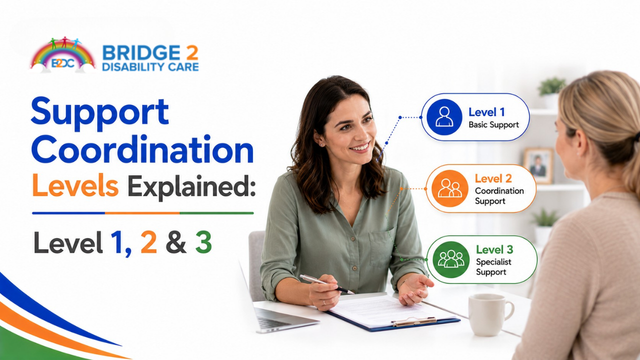
Understanding NDIS Support Coordination Levels
When you’re approved for an NDIS plan with Support Coordination funding, you might notice your plan mentions different “levels” of support. These levels—Level 1, Level 2, and Level 3—aren’t about how good your Support Coordinator is; they’re about how much hands-on help you need to implement your plan and manage your supports.
If you’re navigating the NDIS in Perth or anywhere across Australia, understanding these levels will help you know what to expect from your Support Coordinator and whether the level you’ve been assigned is right for your situation. This guide breaks down each level, what it covers, and how to work out if you need more or less support.
What Are Support Coordination Levels?
Support Coordination Levels are a way the NDIS measures the intensity and frequency of support you need to manage your plan. The NDIA assigns a funding level based on:
- Complexity of your plan: How many providers, services, or goals you’re managing
- Your informal support network: Whether you have family, carers, or friends helping you
- Your capacity to self-manage: Your ability to organise, communicate with providers, and track your plan
- Life changes: Major transitions like school to work, moving home, or changes in your health
The three levels form a spectrum from minimal to intensive support.
Level 1 Support Coordination: Basic Guidance
What It Is: Level 1 is foundational Support Coordination for people who need some help but have reasonable capacity to manage their plan with light-touch guidance.
What’s Included:
- Initial planning: Help understanding your plan and what’s been funded
- Provider connections: Assistance finding and connecting with key service providers
- Plan explanation: Supporting you to understand your goals and what funding covers
- Quarterly check-ins: Regular contact (typically 4 times per year) to see how things are working
- Basic problem-solving: Help if a provider drops out or something isn’t working
- Simple logistics: Assistance with general coordination of your supports
- Annual review support: Help preparing for your yearly plan review
Typical Funding Amount: Generally, Level 1 funding ranges from $1,500–$3,500 per year, depending on your circumstances and location.
Who’s Right for Level 1:
- You have a straightforward plan with 2–3 key services
- You have strong family or carer support helping you manage day-to-day
- You’re comfortable communicating with providers yourself
- Your support needs are stable and unlikely to change frequently
- You’re managing your plan fairly well already
Example: Sarah has an NDIS plan funding physiotherapy and a support worker for 4 hours a week. Her mum helps her coordinate things at home, but Sarah needs help initially finding the right physio and understanding which sessions are covered. Level 1 Support Coordination gives her quarterly check-ins to make sure the physio is working and help if she needs to switch providers.
Level 2 Support Coordination: Active Management
What It Is: Level 2 is for people managing more complex arrangements or who need more regular hands-on support to keep their plan working smoothly.
What’s Included:
- Comprehensive plan implementation: Detailed support setting up all aspects of your plan
- Active provider management: Ongoing contact with providers, troubleshooting, and coordination
- Regular support: Fortnightly or monthly check-ins (typically 8–12 times per year)
- Detailed logistics coordination: Arranging transport, scheduling multiple appointments, coordinating timing across services
- Budget management: Tracking spending, flagging when you’re approaching budget limits, and planning spend strategically
- Plan adjustments: Helping request plan reviews or changes when supports aren’t working
- Transition support: Helping with significant life changes like starting work, moving to new accommodation, or changing schools
- Provider sourcing: Actively finding and vetting providers to meet your specific needs
- Administrative support: Managing paperwork, claims, and NDIS-related administration
Typical Funding Amount: Level 2 funding generally ranges from $3,500–$7,500 per year, though this varies.
Who’s Right for Level 2:
- You have a complex plan with 4+ services or multiple providers
- You have limited family or informal support available
- You’re managing multiple goals across different areas (health, work, community, living skills)
- You need someone coordinating between different services
- You have frequent changes or appointments to schedule
- You’re transitioning to a new stage of life (school to work, independent living, etc.)
Example: one has funding for a job coach, disability support worker (15 hours a week), physiotherapy, and vocational rehabilitation. He lives independently with minimal family support nearby. Level 2 Support Coordination provides fortnightly meetings, helps coordinate between his job coach and support worker, manages his weekly scheduling, and tracks spending to ensure he’s using his budget wisely. When his job coach arrangement changes, his Support Coordinator sources and vets a replacement.
Level 3 Support Coordination: Intensive Support
What It Is: Level 3 is intensive, frequent support for people managing very complex arrangements or who have significant barriers to self-management.
What’s Included:
- Intensive case management: Regular, ongoing involvement in all aspects of plan implementation
- Weekly or fortnightly contact: Consistent support and check-ins (typically 12+ times per year)
- Complex provider coordination: Managing multiple services, ensuring providers work together, and resolving conflicts
- Comprehensive budget management: Detailed tracking, strategic planning, forecasting, and preventing budget issues
- Crisis support: Quick response if things break down or you face unexpected challenges
- Advocacy: Representing your interests with providers, the NDIA, or other services
- Detailed planning: Supporting complex transitions, new arrangements, or significant life changes
- Relationship building: Establishing and maintaining relationships with multiple providers on your behalf
- Ongoing problem-solving: Proactively identifying and addressing barriers to your goals
- Health and wellbeing coordination: Connecting your NDIS supports with medical, mental health, and other services
- Comprehensive administrative support: Handling detailed paperwork, claims, correspondence, and NDIS communications
Typical Funding Amount: Level 3 funding generally ranges from $7,500–$15,000+ per year, depending on complexity and location.
Who’s Right for Level 3:
- You have a very complex plan with 6+ services or many providers
- You have little or no informal support available
- You have high support needs across multiple life areas
- You’re managing significant health, behavioural, or complex support arrangements
- You’re transitioning through a major life change requiring intensive coordination
- You have difficulty advocating for yourself or communicating with services
- Your plan requires frequent adjustments or proactive problem-solving
Example: one has significant intellectual disability and lives in supported accommodation. His plan funds daily disability support, speech therapy, occupational therapy, behavioural support, day programs, and community access. He has no family involvement. Level 3 Support Coordination provides weekly contact, actively manages relationships with all five providers, ensures they’re working together effectively, handles all administrative tasks, and quickly solves problems before they escalate. His Support Coordinator also advocates for him in plan reviews and works with his accommodation provider to ensure supports are integrated.
Key Differences at a Glance
| Aspect | Level 1 | Level 2 | Level 3 |
| Contact Frequency | Quarterly (4x/year) | Fortnightly–Monthly (8–12x/year) | Weekly–Fortnightly (12+x/year) |
| Plan Complexity | Simple (2–3 services) | Moderate (4+ services) | Complex (6+ services) |
| Informal Support | Strong (family/carer help) | Limited | Minimal or none |
| Provider Management | Basic connections | Active coordination | Intensive coordination |
| Budget Oversight | Basic tracking | Regular monitoring | Detailed management |
| Logistics | Light support | Moderate coordination | Comprehensive coordination |
| Typical Annual Funding | $1,500–$3,500 | $3,500–$7,500 | $7,500–$15,000+ |
| Focus | Guidance & check-ins | Active management | Intensive case management |
How the NDIA Decides Your Level
When the NDIA approves your plan, they assess your situation and assign a Support Coordination level. They consider:
Plan Complexity:
- How many different services or providers you’re using
- Whether services need to be coordinated together
- The diversity of your goals (work, health, community, living)
Your Support Network:
- Family involvement and capacity
- Availability of informal carers
- Strength of your community connections
Your Capacity:
- Your ability to communicate with providers
- Your skills in organising and managing logistics
- Whether you can track spending and monitor your plan
Life Stage and Transitions:
- Whether you’re in a major transition (school to work, moving home)
- Upcoming changes that might require coordination
Health and Complexity:
- Whether you have complex health, behavioural, or support needs
- How much problem-solving and advocacy you’re likely to need
Can You Change Your Support Coordination Level?
Yes. Your Support Coordination level isn’t permanent. During your annual plan review, you and the NDIA can discuss whether your current level is working.
You might request a higher level if:
- Your plan has become more complex
- You’re managing new transitions
- Your informal support has reduced
- You’re struggling to manage with your current level
You might accept a lower level if:
- Your situation has stabilized
- You’re managing well with less support
- Your informal support has increased
- Your plan has become simpler
To change your level, discuss it at your plan review or contact your planner directly. Many Support Coordinators will also provide feedback to the NDIA about whether your level is appropriate.
How to Choose a Support Coordinator Within Your Level
Whichever level you’re assigned, the quality of your Support Coordinator matters. When selecting one, look for:
- Experience: Have they worked with your disability type or life stage?
- Local knowledge: Do they know disability services and providers in Perth (or your area)?
- Communication style: Do they explain things clearly and listen to what you need?
- Availability: Can they meet your contact frequency needs consistently?
- Provider relationships: Have they established relationships with local providers?
- Problem-solving approach: How do they handle challenges or conflicts?
Making the Most of Your Support Coordination Level
For Level 1:
- Build a good relationship with your Support Coordinator—make the most of quarterly meetings
- Keep track of your own information between contact points
- Ask for help early if something isn’t working
For Level 2:
- Use the regular contact to stay on top of your plan and budget
- Plan major changes in advance so your coordinator can help you prepare
- Ask for advice on provider relationships or scheduling challenges
For Level 3:
- Lean on your coordinator for active management they’re there to handle complexity
- Use weekly contact to address issues before they escalate
- Trust them to advocate for you and manage provider relationships
Conclusion
Support Coordination levels aren’t about the quality of your support—they’re about matching the intensity of support to your situation. Whether you need Level 1 guidance, Level 2 active management, or Level 3 intensive support depends on your plan’s complexity, the informal support you have, and your capacity to self-manage.
The right level makes your NDIS journey clearer and less stressful. If you’re unsure whether your current level is working, talk to your Support Coordinator or raise it at your plan review. Your needs may change over time, and your support should change with them.
📞 Let’s Stay Connected
Looking for guidance on navigating your NDIS support options?
📧 info@bridge2disabilitycare.com.au
📞 08 6119 9696
🌐 bridge2disabilitycare.com.
FAQ’s
1: What if I don’t think my level is right?
A: Discuss it with your Support Coordinator and ask for feedback during your plan review. If they agree your level doesn’t match your needs, they can recommend a change to the NDIA.
2: Can I get a higher level mid-year if my situation changes?
A: In some cases, yes. If your situation changes significantly (major life change, loss of informal support), you can request an early plan review to discuss adjusting your Support Coordination level.
3: Do I have to use all my Support Coordination funding?
A: No, but it’s designed to help you get the most from your plan. If you’re not using it, discuss with your coordinator why there might be barriers they can help address.
4: What if my Support Coordinator says I should have a different level?
A: They can make a recommendation to the NDIA during your plan review. While the NDIA makes the final decision, experienced coordinators’ recommendations are usually taken seriously.
5: Is higher level always better?
A: Not necessarily. Level 3 is more intensive and costly, but it’s only better if that’s the level of support you actually need. A good match between your situation and your level is what matters.