
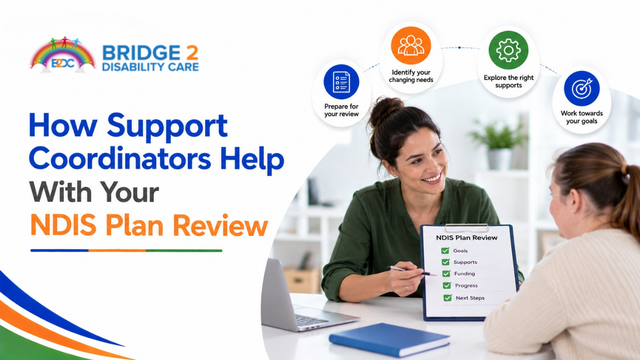
Understanding Your NDIS Plan Review
An NDIS plan review is an important opportunity to look at how your current supports are working and whether your plan still reflects your goals and circumstances.
For many participants, preparing for a review can feel overwhelming. You may need to remember what services you have used, explain what has worked, identify what has not worked, and think about what you may need in the future.
This is where a Support Coordinator can provide practical assistance.
A Support Coordinator can help you understand your current plan, track progress towards your goals, gather information from providers, identify areas where your supports may need to change, and prepare you for conversations about your next plan.
The goal isn’t simply to ask for more funding. It is to make sure your NDIS plan continues to reflect your actual needs, goals and circumstances.
What Is an NDIS Plan Review?
An NDIS plan review is an opportunity to assess whether your current NDIS supports are helping you work towards your goals.
Your circumstances may change during a plan period. You may start working, move into new accommodation, change providers, develop new goals, or find that an existing support is no longer meeting your needs.
A review can help identify:
- What supports are working well
- What supports are not working
- Whether your goals have changed
- Whether your circumstances have changed
- What progress you have made
- What barriers are affecting your progress
- Whether changes to your supports may be required
Your Support Coordinator can help you organise this information so that you are better prepared for the review.
How Support Coordinators Help Prepare for a Plan Review
1. Reviewing Your Current NDIS Plan
The first step is understanding what is currently included in your plan.
Your Support Coordinator can review your funded supports with you and help explain how they relate to your goals.
They may look at:
- Your current support categories
- The providers you are using
- Your available funding
- Services you have accessed
- Your current goals
- Areas where supports may not be working effectively
This gives you a clearer picture of where you currently stand before the review.
2. Tracking Progress Towards Your Goals
Your NDIS plan is designed around your individual goals.
A Support Coordinator can help you look at what progress you have made and whether your current supports are contributing to those outcomes.
For example, if one of your goals is to become more independent in the community, your coordinator might help you consider:
- How often you are accessing the community
- Whether your support worker arrangement is working
- What skills you have developed
- What barriers are still affecting your independence
- What additional support may help you progress
The focus should be on your actual outcomes rather than simply listing the services you receive.
3. Identifying What Is and Isn’t Working
Not every support arrangement works perfectly.
You may have a provider who is no longer available, a support worker who isn’t the right fit, therapy that isn’t producing the expected outcomes, or scheduling problems between different services.
Your Support Coordinator can help identify these issues and document what has happened.
This is important because your plan review should reflect your real experience.
If something isn’t working, your coordinator can help you explore alternative providers or approaches and explain what changes may be needed.
4. Gathering Information From Providers
Your Support Coordinator may communicate with your providers to understand how your supports are progressing.
This can include gathering information about:
- Services delivered
- Progress towards goals
- Challenges or barriers
- Changes in your circumstances
- Recommendations for future support
- Provider concerns or observations
Having information from multiple providers can give you a more complete picture of your situation.
5. Identifying Changes in Your Circumstances
Your needs may change during an NDIS plan period.
You might:
- Move house
- Start or change employment
- Begin studying
- Change your living arrangements
- Need different providers
- Develop new goals
- Lose informal family support
- Experience changes that affect how you manage your supports
Your Support Coordinator can help you identify these changes and consider how they affect your current plan.
The document highlights life transitions such as moving home, starting work, changing schools and moving towards independent living as situations where coordination may become particularly important.
6. Preparing Questions and Priorities
A plan review can involve a lot of information.
Your Support Coordinator can help you think about the key things you want to communicate.
Before the review, consider:
- What are my most important goals?
- What supports are working?
- What supports aren’t working?
- What barriers am I experiencing?
- Have my circumstances changed?
- Are there services I need to change or replace?
- What progress have I made?
- What do I want to work towards next?
Preparing these points can make the review conversation clearer and more focused.
7. Supporting You to Advocate for Yourself
Support Coordination isn’t about making decisions on your behalf.
A good Support Coordinator helps you understand your options and develop the confidence to communicate your needs.
The document specifically describes self-advocacy as an important part of Support Coordination, with coordinators helping participants develop skills and confidence rather than simply solving every problem for them.
During a plan review, this can mean helping you understand what you want to say and supporting you while you communicate your priorities.
What Evidence May Be Useful?
The exact information required will depend on your circumstances, but useful documentation may include:
- Provider progress reports
- Therapy reports
- Information about completed supports
- Records of challenges or barriers
- Information about changes in circumstances
- Evidence of progress towards goals
- Recommendations from relevant providers
- Notes about unsuccessful support arrangements
Your Support Coordinator can help you understand what information may be useful and organise it before the review.
What If Your Current Support Level Is No Longer Enough?
Your circumstances may become more complex over time.
The document explains that Support Coordination levels can be reconsidered when circumstances change, including increased plan complexity, major transitions, reduced informal support or difficulty managing with the current level.
If your current level of Support Coordination no longer reflects your situation, you can discuss this during your plan review.
Your Support Coordinator may also provide information about how your current level is working and what additional coordination may be required.
What If Your Situation Has Become Simpler?
Changes can work in the other direction too.
If your circumstances have stabilised, your plan has become simpler, or you have stronger informal support, you may find that you need less assistance.
The purpose of a review is not automatically to increase support. It is to make sure your supports match your current situation.
A Simple Plan Review Preparation Checklist
Before your review, it can help to think through:
Your goals
- What have you achieved?
- What are you currently working towards?
- Have your goals changed?
Your supports
- Which services are working well?
- Which services aren’t working?
- Do you need to change providers?
Your circumstances
- Has anything changed at home, work, study or in your community?
- Has your informal support changed?
Your future
- What would you like to achieve during your next plan period?
- What barriers are preventing you from reaching those goals?
- What support could help?
How Your Support Coordinator Can Help After the Review
Support Coordination doesn’t necessarily stop when your review is completed.
Once a new plan is in place, your Support Coordinator can help you understand changes, connect with providers, organise services and put the new plan into practice.
This is an important distinction: a plan is only useful when the supports within it can actually be implemented effectively.
The document describes Support Coordinators as helping turn an approved plan into real, working supports by connecting participants with providers, coordinating services, managing practical arrangements and troubleshooting problems.
Conclusion
Preparing for an NDIS plan review doesn’t have to mean trying to remember everything yourself.
A Support Coordinator can help you review your current supports, track progress, identify problems, gather relevant information and prepare for discussions about your future goals.
The most important thing is that your plan reflects your current circumstances and supports you in working towards meaningful outcomes.
If your needs have changed, your current services aren’t working, or you’re unsure how to prepare for your next review, speaking with your Support Coordinator, LAC or planner can help you understand your next steps.
Let’s Stay Connected
Looking for guidance with your NDIS plan and Support Coordination?
📧 info@bridge2disabilitycare.com.au
📞 08 6119 9696
🌐 bridge2disabilitycare.com.au
FAQ’s
1: Can a Support Coordinator attend my NDIS plan review?
A: A Support Coordinator may support you with preparation and, where appropriate, participate in planning or review discussions. Their involvement depends on your circumstances and the arrangements in place.
2: What should I tell my Support Coordinator before my plan review?
A: Tell them about changes to your goals, services, providers, living arrangements, informal supports and any problems you’ve experienced with your current plan.
3: Can my Support Coordinator request changes to my NDIS plan?
A: They can help identify areas where changes may be needed and provide supporting information or recommendations. The appropriate NDIS decision-maker determines the final plan.
4: What if my current supports aren’t helping me achieve my goals?
A: Tell your Support Coordinator as early as possible. They can help identify the problem, explore alternative options and document what has or hasn’t worked.
5: Can my Support Coordination level change after a review?
A: Your Support Coordination needs can be reconsidered when your circumstances or support needs change. Discuss this with your Support Coordinator, LAC or planner.