
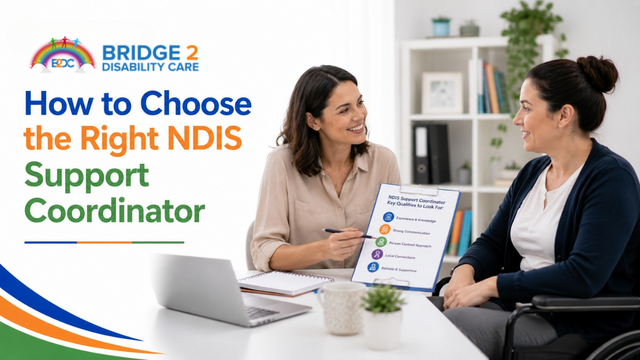
Choosing the right support coordinator is one of the most important decisions you can make in your NDIS journey. A support coordinator plays a crucial role in helping you understand your plan, connect with appropriate services, and work towards achieving your personal goals. The right coordinator can make the entire process smoother, more efficient, and less stressful.
With many providers available, selecting the right support coordinator requires careful thought. It is not just about finding someone who understands the NDIS system, but also someone who understands your unique needs, preferences, and long-term goals.
What to Look For in a Support Coordinator
There are several important factors to consider when choosing a support coordinator.
Experience with NDIS participants
An experienced coordinator will have a strong understanding of how the NDIS works, including funding categories, service providers, and processes.
Strong knowledge of services
A good support coordinator should be familiar with a wide range of service providers and support options. This helps ensure you are connected with services that best suit your needs.
Communication skills
Clear and effective communication is essential. Your coordinator should be able to explain your plan in simple terms and keep you informed at every step.
Flexibility and personalised approach
Every participant has different needs. A good coordinator will tailor their support to suit your goals and circumstances rather than offering a one-size-fits-all approach.
Why Choosing the Right Coordinator Matters
The right support coordinator ensures that your NDIS funding is used effectively. They help you avoid common mistakes, such as choosing unsuitable providers or not fully utilising your funding.
They also support you in building confidence and independence over time. Instead of relying entirely on support, you gradually learn how to manage your plan more effectively.
Making the Right Choice
Take time to research and compare different providers. Speak with potential coordinators, ask questions, and understand how they work. It is important to feel comfortable and confident with your choice.
You can also seek feedback from other participants or read reviews to gain insights into their experiences.
Ultimately, the right support coordinator should feel like a partner in your journey—someone who supports, guides, and empowers you.
Conclusion
Choosing the right support coordinator can have a lasting impact on your NDIS experience. With the right guidance, you can better understand your plan, access the right services, and work towards your goals with confidence.
We focus on providing personalised assistance so participants can confidently navigate their NDIS journey and work towards their goals with the right supports in place.
📞 Let’s Stay Connected
Looking for guidance or personalised disability support?
📧 info@disabilityserviceswa.com.au
📞08 6119 9696
🌐 bridge2disabilitycare.com.au
FAQ’s
- How do I choose a support coordinator?
Start by checking their experience, communication style, and knowledge of services. Speak with them directly to see if they understand your needs. - Can I change my support coordinator later?
Yes, you can change your coordinator if you are not satisfied. You may need to follow the terms in your service agreement. - Should I choose a coordinator familiar with local services?
Yes, coordinators with strong knowledge of available services can connect you to better support options. - What qualifications should a support coordinator have?
While formal qualifications can help, experience and understanding of the NDIS system are equally important. - How do I compare different providers?
Compare their experience, services offered, communication approach, and feedback from other participants.